Playful vs Overstimulated Cat: Read the Body Signals
How do I tell the difference between a playful cat and an overstimulated cat from body language?
Cats can switch from “having fun” to “too much” in seconds, and their body language is usually the earliest warning. Watching the tail, ears, eyes, and overall posture helps you decide whether to keep playing, change the game, or pause and give space.
What playful body language usually looks like
A playful cat tends to look loose and bouncy. You may see a relaxed, curved body, a “question-mark” tail held upright, and ears that are forward or gently swiveling. Eyes are bright and alert, but not hard; pupils may be a little wider during excitement. Playful cats often do short bursts—pouncing, chasing, or bunny-kicking toys—then re-engage without tension. You might also notice play signals like a sideways hop, a quick head tilt, or brief pauses before another pounce.
What overstimulation looks like (and why it matters)
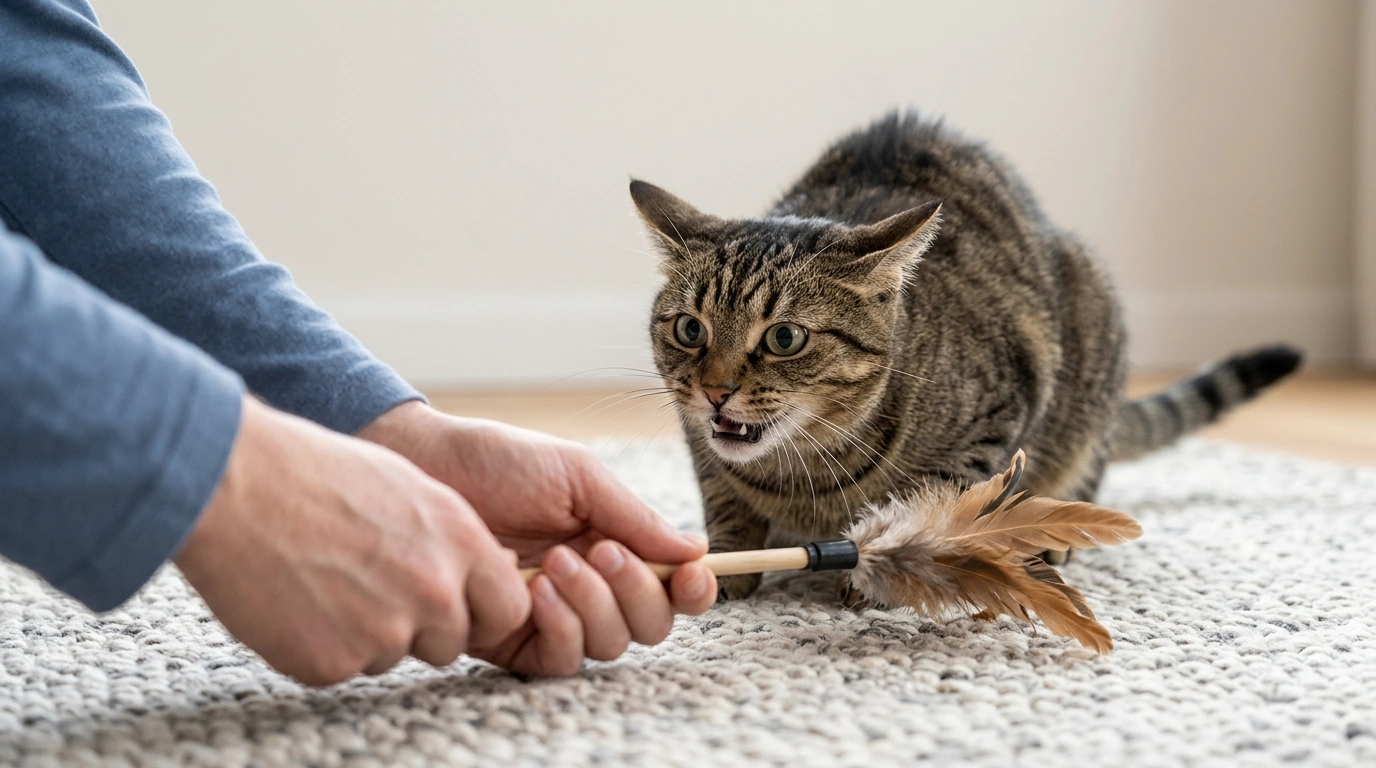
An overstimulated cat often looks tight, twitchy, or suddenly “sharp.” Common signs include rapid tail lashing or thumping, skin rippling along the back, ears turning sideways (“airplane ears”) or pinning back, and pupils that go very wide. The body may stiffen, and the cat may freeze before swatting, biting, or bolting. Vocal cues can change too—low growls, sharp meows, or hissing indicate the cat is past the fun zone.
Quick checkpoints while you interact
If the tail is gently waving or upright and the body stays loose, play is usually welcome. If the tail is snapping, the back twitches, or the cat starts turning to watch your hand with a tense stare, pause immediately. Switch to a wand toy to create distance, slow the pace, or end the session and let your cat reset in a calm spot.
For a deeper breakdown of signals and what to do next, visit the full guide here.
FAQ
What should I do if my cat gets overstimulated during petting?
Stop touching right away and give your cat space. Let them move away without following, and resume affection later in shorter sessions focused on areas your cat enjoys.








Leave a comment